When in Rome: A New Look at Old Gods
About
From Chapter 6: Medea and Jason
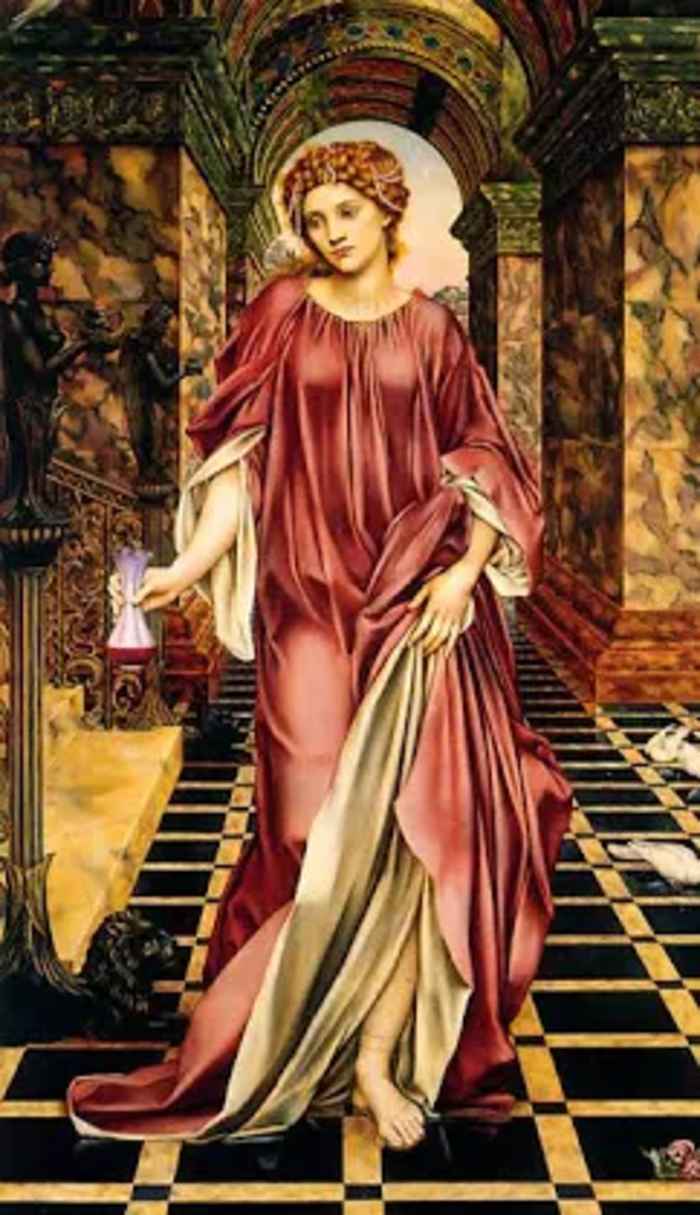
When she met Jason, Medea was a very young woman, known to be a magician, yes, but only locally. I like to think of her as seventeen, but she might have been younger. She was a beauty and a follower of Hecate, a powerful goddess of the underworld. She was also the niece of the powerful witch Circe, who becomes important in Ulysses’ story.
Medea was engaged to an Albanian prince who would add a powerful connection to her royal family. She had accepted the engagement as a done deal. She was a loving, obedient, and loyal daughter to her parents. There was no particular reason to think she would become a disrupter.
Despite her association with Hecate, Flaccus portrays Medea as a good-natured girl who knows how to regulate her emotions. She prays often, and her prayers are mostly for the ongoing welfare of others. She obeys her mother and father and cares diligently for her pet dragon.
Flaccus’ version of the Argonautica has often been dismissed as clumsy, not as artistic as the work of Apollonius of Rhodes who also took up the subject in the Greek language. But Flaccus’ depiction of a perfectly healthy girl descending into complete and utter madness is unmatched anywhere in literature.
Jason was sea battered and exhausted, not just from his voyage, but also from anxiety. He had lost some of his youthful good looks, but Juno used her powers to restore his beauty and make him dazzle. She hid him in a cloud until he reached the center of town and the temple where Aeetes, King of Colchis, was making sacrifices to the Sun god, who happened to be Aeetes' father.
Aeetes’ parents were both immortals. Despite that rather illustrious heritage, he was not a noble man. He had no intention of handing over the fleece, but he did see an opportunity to use Jason and his crew. Somehow, Aeetes convinced the Argonauts to join him in fighting against his brother Perses. Perses, Aeetes assured the Argonauts, was trying to usurp the throne. This was a vile deception.
The truth was that Perses had already told Aeetes to hand the fleece over to the Thessalians. It belonged to them, for gods’ sake, Perses noted. Phryxus was Greek. Jason was his heir. A priest had also told Aeetes that it was the will of the gods that Jason win the ramskin. That was what Perses and Aeetes were really quarreling about.
But the Argonauts did not know that. Aeetes told them, sure, he would give them the fleece, but first he needed them to join him in battle against his usurping brother. The Argonauts agreed. Perses got wind that the Argonauts had chosen Aeetes' side, and he tried to send them a message, setting them straight. But Mars wanted a war, so he set up a loud war cry that infected the fighters and drove them immediately into battle.
Meanwhile, Juno had decided to support Jason and the Argonauts against the Colchians, now that Hercules was not one of their number. And, like most narcissists, she didn’t care who she destroyed in the process of getting her way. She took the form of Medea’s sister Chalciope and strode to Medea’s chamber.
In the guise of Chalciope, Juno persuaded Medea to climb to the top of the city wall and watch the battle. The girl had already seen Jason without losing her head. But now she was under the influence of the most powerful Olympian goddess, one whose largely-unused skill set was creating harmonious human pairings.
Medea saw Jason running here and there on the battlefield, agile, strong, efficient. He was an able fighter, but Juno increased his strength and ability so that Medea could not help but admire him. Loyal sister and Colchian that Medea was, she looked for her brother, Absyrtus, and her fiance, Stygus. But everywhere she looked, there was Jason.
She wondered, briefly, if the woman sitting with her were really her sister. But then she did start feeling some empathy for the Greek visitors. She wondered out loud if her father would play fair and give up the fleece as he had promised. And why were the Argonauts fighting for a country that was foreign to them? When she heard these questions, Juno believed that she had won, and Medea would take Jason’s part in everything.
She was wrong. Medea was much stronger than Juno thought.
With the help of the Argonauts, Aeetes won the battle against his brother. The Argonauts were anxious to collect the fleece and be off. While they waited for Aeetes to complete his morning sacrifices, Jason looked around for the artifact. Surely, they had brought it from the sacred grove so that it would be ready to go aboard the Argo.
When he finally addressed the Argonauts, Aeetes acted like he had never met them. He had never heard of Greece. They must be pirates. Crazy pirates. He ordered them to leave. Or if they still wanted the fleece, they would have to subdue some magic bulls on the plain of Mars, and use them to plow and plant some seeds.
Jason could now see that he was dealing with another tyrant, much like the uncle back in Thessaly. It was a bitter realization. In despair, he swore that he would never leave Colchis without the fleece. So he agreed to the new challenge, even though it spelled certain death.
Medea’s fledgling passion had kept her awake for much of the night, but she applied reason and logic to the situation. It was “madness” to be thinking of Jason, definitely a mistake, she explained to herself. Her father should just give him the fleece, and let him leave. Upon awaking, she revisited this passion and found that she could get the better of it.
As she said her morning prayers, she begged the gods to let Jason return safely to Greece. Touchingly, she added a prayer that he would not hate her father. Crush, done and dusted. She had shaken off most of Juno’s poison and regained possession of her virgin heart.